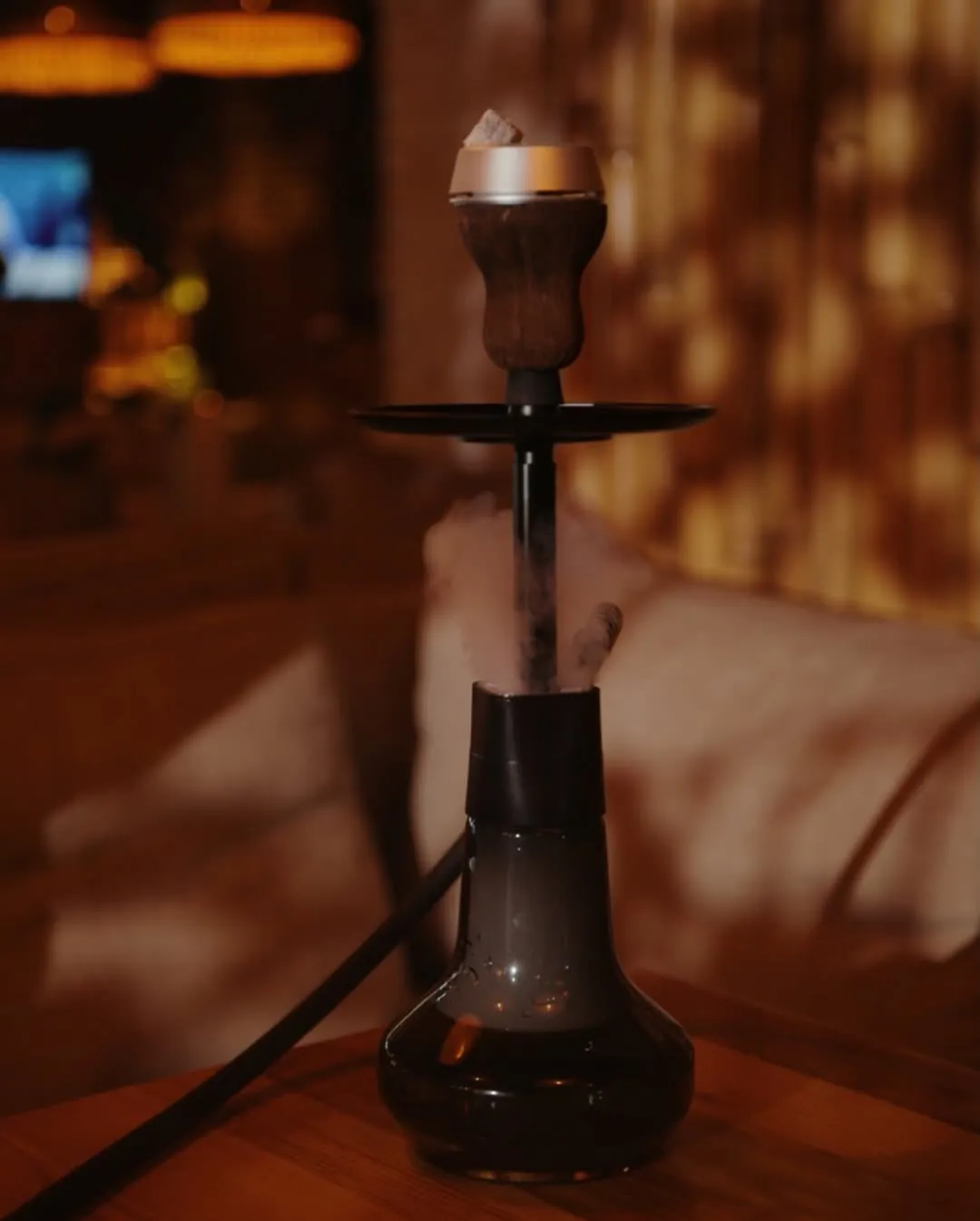
If you have only ever seen shisha through the window of a college-town hookah bar, the version that exists inside a proper lounge will feel almost unrelated. The water pipe is the same. The premise — flavoured tobacco, heated indirectly by coal, drawn through water — is the same. Almost everything else is different.
This is a short guide to what shisha actually is, how it works, where it comes from, and what you should expect from a session if you have never had one in a place that takes it seriously.
What shisha actually is
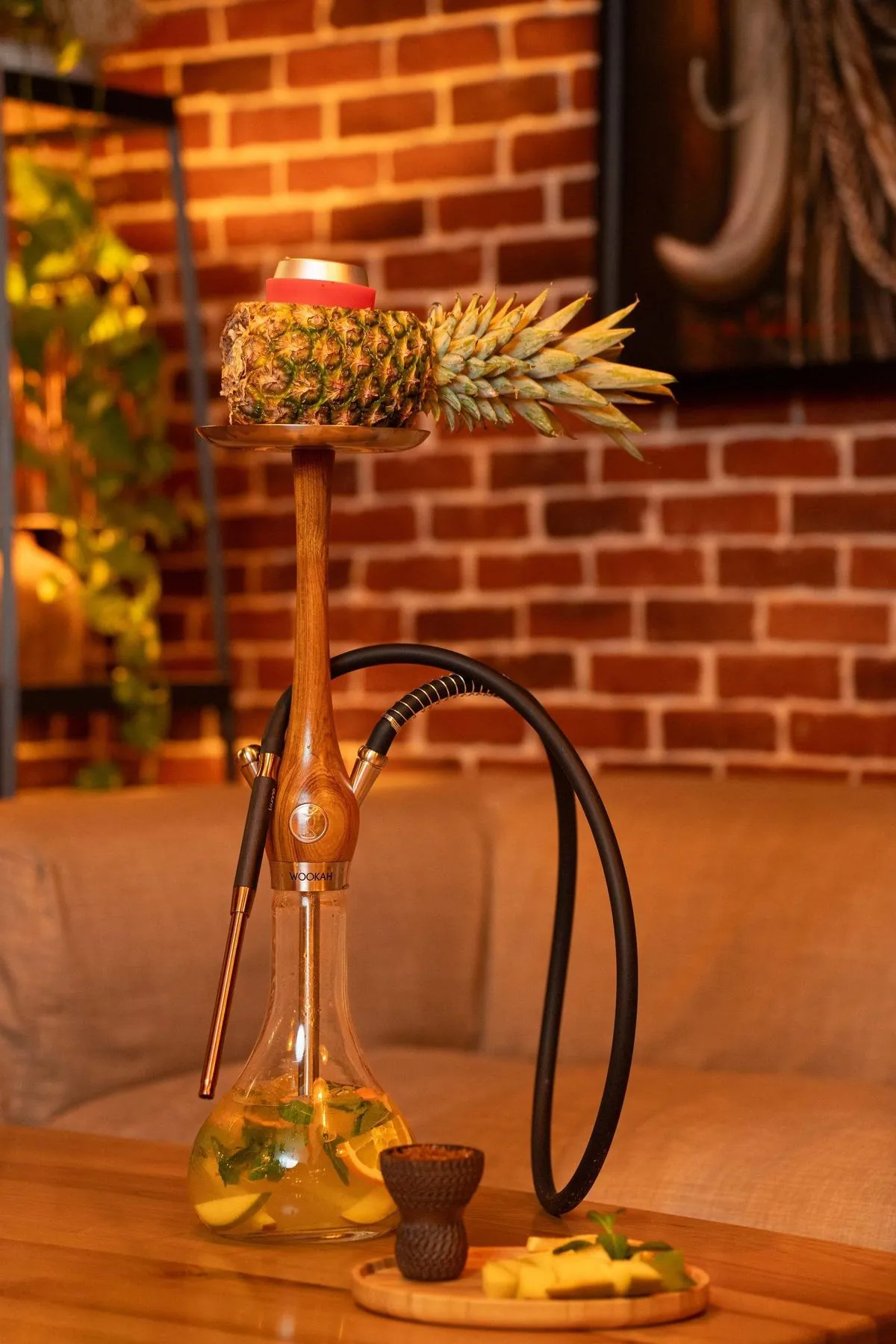
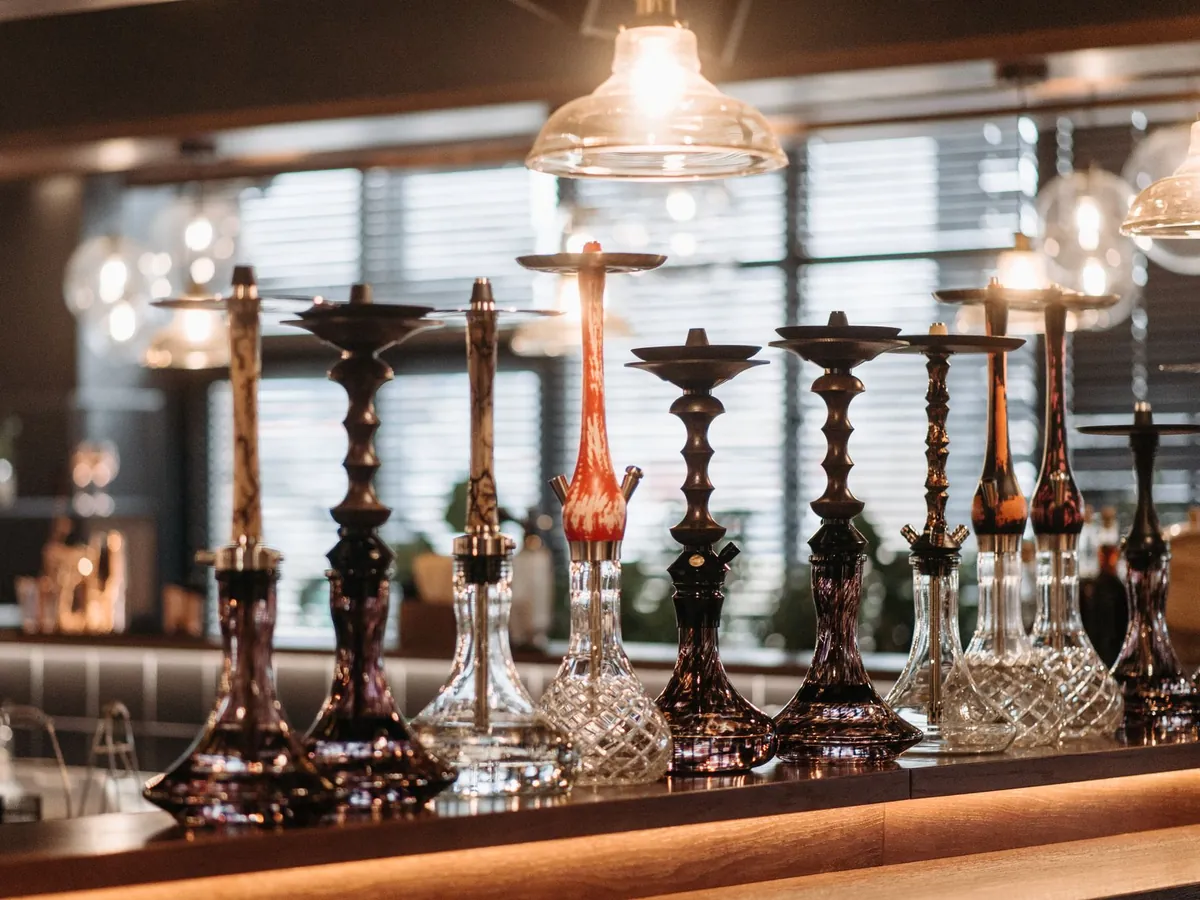
"Shisha" refers to two things at once: the pipe (also called a hookah, narghile, or argile depending on where you grew up) and the flavoured tobacco that goes in the bowl on top of it. The pipe is a tall glass base partially filled with water, a stem that rises out of it, a clay or porcelain bowl at the top, and one or more hoses running out the side. You inhale through the hose; the smoke is pulled down through the water, which cools and softens it, before it reaches you.
The tobacco itself — the part that gives a session its character — is rarely just tobacco. It is a moist blend of leaf, glycerine, fruit pulp or molasses, and flavouring, packed into the bowl and covered by aluminium foil or a heat-management device. A small pile of hot coal sits on top. The coal never touches the tobacco. It heats it slowly, from above, so the leaf releases vapour rather than burning. That distinction — vapour rather than smoke — is why a careful bowl tastes the way it does.
A short history of the practice
The water pipe is old. The earliest forms appeared in what is now Iran or India around four hundred years ago, and the device spread west across the Ottoman world, where it became a fixture of café life. For centuries it was a slow, social object, sitting between two or three people across a long afternoon. The flavoured "shisha" tobacco we know today — sweetened, fruited, soft on the throat — is a much more recent invention, mostly mid-twentieth century Egyptian, and that is the version that travelled to Europe in the nineties.
So when you sit down with a shisha in Bucharest in 2026, you are participating in two histories at once. The pipe is genuinely ancient. The flavour profile is essentially modern. The slowness, though — that has never changed.
What a proper session looks like
A session at a serious lounge has a structure, and that structure matters. The order of operations:
- You choose a flavour with the master or a server who can describe what each one tastes like rather than reading the menu back to you.
- The bowl is packed and lit out of sight — five to ten minutes — and brought to the table when the first draw is clean.
- The master adjusts the coal once or twice in the first quarter hour to find the right temperature for your bowl.
- The session lasts about ninety minutes. Roughly halfway through, the coal is rotated or refreshed. Toward the end, the glass is sometimes swapped for a second bowl in a different flavour.
- You are never expected to keep up with the bowl. Two or three draws every few minutes is plenty. The point is to sit, talk, and let the smoke move at the pace of the conversation.
A bad shisha session usually goes wrong at step two or three: the bowl arrives over-coaled and harsh, or under-coaled and tasteless, and the staff disappear until you flag them down. The line between a good evening and a forgettable one is almost entirely the person managing the coal.
The smoke is the byproduct. The ritual is the point.
Dark, blond, and the flavour conversation
Shisha tobacco comes in two broad families that organise almost every lounge menu in the world: dark and blond. Dark is the stronger, more traditional cut — closer to cigarette tobacco in body, lower in glycerine, heavier on the throat. Blond is the softer, sweeter, vapour-heavy modern style that most beginners gravitate to. Most lounges, ours included, will offer both, and a good master will steer you between them based on what you have eaten, what you have drunk, and what kind of evening you say you want.
We have written a longer piece on choosing between the two — read it here — but the short version is that blond is forgiving and dark is interesting, and the only honest way to find your side of the line is to try both.
Is shisha safe? An honest note
Shisha is a tobacco product. It is not a healthier alternative to cigarettes, despite the smoother feel of the vapour. A standard session delivers nicotine and the same combustion byproducts you would expect from any burning tobacco, and that is true whether the bowl is gentle and well-made or harsh and badly made. We tell guests this directly, because we would rather you make an informed choice about an occasional pleasure than feel misled into thinking it is something it is not. If you are pregnant, asthmatic, or under eighteen, shisha is not for you.
For everyone else, the appeal is exactly what it has been for four hundred years: a slow, shared object at the centre of a table, around which a long conversation can take its time.
How to make the most of your first session
If you have never had a proper shisha, a few small things will make the first time better than it would otherwise be:
- Eat first. The vapour is gentle on a full stomach and a bit much on an empty one.
- Pick a blond flavour — mint, peach, watermelon, grapefruit — for your first bowl. Save the dark blends for after you know what you like.
- Sit for at least an hour. Sessions don't reveal themselves in twenty minutes.
- Don't compete with the pipe. Let the conversation lead; the smoke will keep up.
- Ask your master. Almost all of them are pleased to be asked — that's the part they trained for.
If you would like to try one at Komodo, our masters take care of every bowl from start to finish; the menu lists our tobacco selection, and our team can guide you to the right one when you arrive. Reserve a table here — sessions are by reservation only.