A sushi menu can read like vocabulary homework if you have never been told what the words mean. Nigiri, sashimi, maki, hosomaki, uramaki, temaki, gunkan, chirashi — half of these you have probably ordered without quite knowing what you were getting. The good news is that the categories are simpler than the names make them look, and ten minutes of reading is enough to never feel lost in front of a sushi menu again.
Here is a short, opinionated taxonomy of the most common sushi formats, what each one actually is, when to order it, and a few small rules worth knowing — and a few worth politely breaking.
The first rule: sushi means rice
The word "sushi" refers to the vinegared rice, not the fish. This is the single fact that organises everything else. If a dish has the seasoned rice, it is sushi. If it doesn't, even if it has the best fish in the room, it is something else (probably sashimi). This is why sashimi technically isn't sushi at all — they sit on the same menu out of convenience, not out of category.
Once you have that anchor, the rest of the menu sorts itself by one question: what is the rice doing?
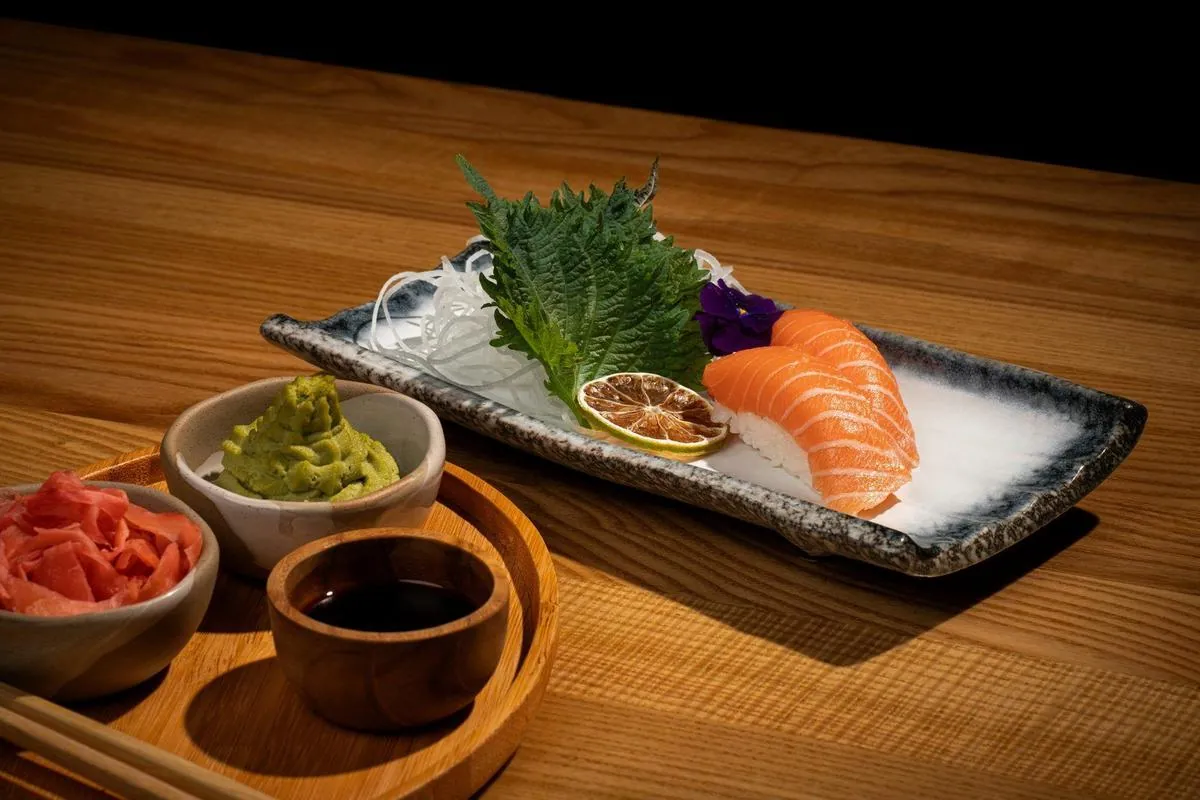
Nigiri: rice underneath
Nigiri is the most direct expression of sushi as a form. A hand-formed oval of vinegared rice with a single piece of fish (or shellfish, or omelette) draped across the top. Often a small smear of wasabi sits between the rice and the fish; sometimes the chef brushes the top with a glaze of soy or nikiri. That is it. The whole point is the relationship between two ingredients held in proportion.
Order nigiri when you want to actually taste the fish — its fat, its temperature, its cut. Pick two or three pieces of one species (say, salmon: a regular, a torched, a belly cut) to learn what a kitchen can do with a single ingredient. Nigiri is the form on which sushi chefs are judged.
Sashimi: just the fish
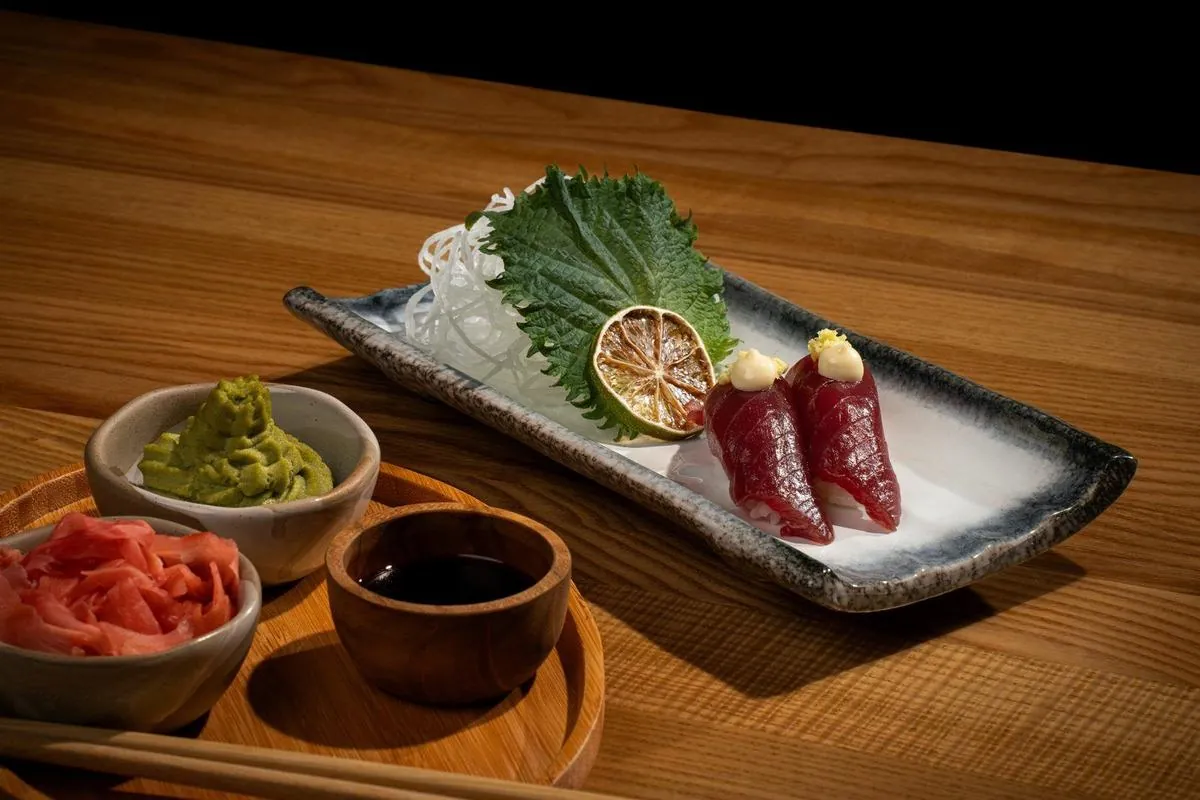
Sashimi is fish, sliced, served cold, on its own. No rice, no roll, no nori. The cut matters enormously — angle, thickness, direction of the grain — and so does the temperature when it reaches you, which should be just-cold rather than refrigerator-cold. A serving is typically three to five slices, usually plated over shredded daikon or shiso.
Order sashimi early in a meal, before your palate is full of soy sauce and pickled ginger. It is also the dish to order if you want to evaluate a sushi kitchen's fish supply directly — there is nowhere to hide a mediocre cut of tuna once the rice is gone.
Maki: rice rolled
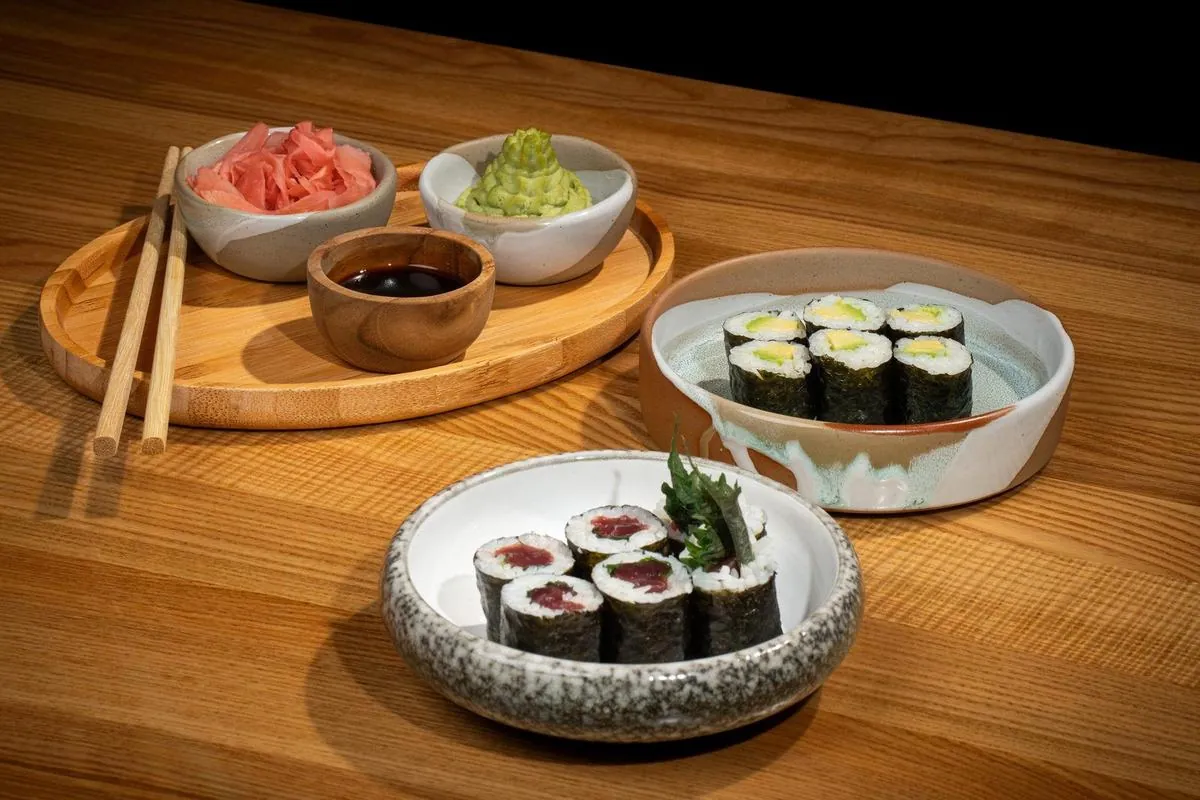
Maki is the umbrella category for sushi rolls — rice and fillings rolled inside a sheet of nori (seaweed), then sliced into bite-sized rounds. Within maki, the most common subtypes:
- Hosomaki — thin rolls, usually one ingredient inside, six pieces per roll. The most traditional roll format. Salmon hosomaki, cucumber hosomaki, tuna hosomaki.
- Uramaki — "inside-out" rolls, where the rice is on the outside and the nori wraps the filling inside. This is the format Western sushi rolls (California, Philadelphia, dragon, rainbow) almost always use, with the outer rice often coated in sesame, tobiko, or thinly-sliced fish.
- Temaki — hand rolls. A cone of nori, the rice and filling tucked inside, designed to be eaten with your hands. Best eaten within ninety seconds of being made, because the nori softens fast.
- Futomaki — fat rolls, three to five ingredients inside, sliced thick. Lunchtime sushi, more rustic than refined.
Order maki when you want richness and play — sauces, layered textures, contrasts between cool fish and warm rice. The Western-style uramaki rolls (anything with a "name" rather than a single-ingredient label) are usually where a kitchen shows off its sauce work, and they are usually delicious. They are sushi in the way that a wagyu burger is steak: not the pure form, but absolutely the point of half the menu.
You don't have to choose. A good order has all three, in the right order.
Two other words worth knowing
Gunkan ("battleship") is a small cylinder of rice wrapped in a strip of nori with a soft topping mounded on top — uni (sea urchin), ikura (salmon roe), tobiko (flying-fish roe), or chopped tuna. It is the format used when the topping is too loose to sit on top of regular nigiri. Order it when you see uni or salmon roe on the menu and want them in single-bite form.
Chirashi ("scattered") is a bowl of vinegared rice with sashimi and other toppings arranged across the surface. It is the format you order if you want a one-bowl meal that does justice to several cuts of fish at once. Most kitchens do a great chirashi or a forgettable one — there is rarely middle ground.
The order that works at most meals
If you would like a quick template that works in almost any sushi kitchen, including ours, this is the one we recommend to first-time guests:
- Open with sashimi. One species, two or three slices. Empty palate, cold fish.
- Move to nigiri. Three or four pieces, including at least one piece from the day's recommendation.
- Finish with maki. One Western-style roll for the table, or two single-ingredient hosomaki if you want to keep it traditional.
- If you are still hungry, order a gunkan or two. Roe goes last because the brininess closes the meal cleanly.
This order respects how flavours stack — light to rich, cold to room-temperature, simple to layered — and it gives the kitchen a chance to show you what it does best in the format where it shows best.
Three rules to politely break
Most "sushi etiquette" articles online repeat the same set of inherited rules. We respect most of them. We also think it is worth knowing which to ignore.
- "Never mix wasabi into soy sauce." Don't lecture anyone who does. It is genuinely the wrong way to enjoy a piece of careful nigiri, but if it is how you grew up eating sushi, it is also fine.
- "Eat nigiri with your fingers, not chopsticks." Technically correct. Practically, do what makes you comfortable — sushi gets cold and stops being good faster than your fork etiquette matters.
- "Don't bite a piece in half." True for nigiri (the rice falls apart). Untrue for thicker uramaki rolls. Use judgment, not rules.
The only rule we'd actually defend, every single time, is this one: eat sushi while it is freshly made. The window in which a piece of nigiri is at its peak is about ninety seconds. Talk while you eat, by all means, but don't let the plate sit. Everything else is preference.
The full Komodo sushi list — nigiri, sashimi, hosomaki, uramaki and a few platters built for sharing — is on the menu page here, and the sushi counter is open all evening. If you would like a seat, reserve a table and we'll have something for you to start with.